Showing posts with label air-prune. Show all posts

Monday, January 22, 2007

Longleaf Pine

200 years ago, longleaf pine trees covered 30 to 60 million acres of the southeastern United States Coastal Plains. Today, due to logging and development, less than 5% of those forests remain. Many native species, such as gopher tortoises, Florida mice, gopher frogs and eastern diamond-back rattlesnakes, rely on the longleaf pine ecosystem for survival and the red-cockaded woodpeckers and indigo snakes are now endangered due to the dramatic decline in this habitat.

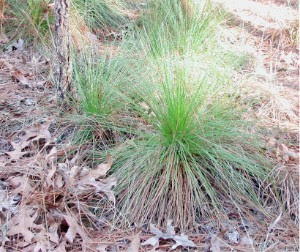
Restoration of the longleaf pine ecosystem is a major effort with many difficulties. The largest difficulty with restoring longleaf pines is the extended time the plant spends in the grass stage. During the first 3 - 15 years, depending on competition, these plants expend almost all energy growing a long taproot and none on stem elongation. In this stage, the tree stem is only about 2-3" long and looks like a small stand of grass.


EMI is currently looking into procuring some longleaf pine seeds on which to test the air-pruning process. We have every reason to believe that this species will perform to the same standards as other EMI plants, meaning 3-5' of growth in the first seven months. This kind of growth rate could be a huge advantage for restoration projects. Planting a seedling at 3-5' would place the plant out of reach of most predators as well as above the burn height that threatens these trees during wild fires. Other basic air-pruning advantages would also apply; flood and drought resistance, early fruiting, high survivability and an earlier return of habitat for native wildlife.

Thursday, January 18, 2007

Plant a Tree for Me

After finding an article that said Michael Dell spends about 2 hours a day reading and answering e-mails, I sent him a message about EMIP and the advantages to using air-pruned plants for their Plant a Tree for Me program. I never expected my message to be read much less to get a response, but I had to eat my words. Mr. Dell forwarded my e-mail to Dell's head of world wide Sustainability initiatives. The gentleman e-mailed me saying he found EMIP intriguing and was sending our information to Carbonfund.org and The Conservation Fund, the two groups responsible for planting and sustaining the trees.

Getting involved with a nationwide restoration program such as this could be just the endorsement and advertisement that EMIP and air-pruning need. It's a very exciting possibility.

Saturday, December 02, 2006

Treatment Wetlands

Many cities are using wetlands not only to enhance the environment, but to enhance their sewage treatment systems as well. Wetlands are considered the most productive habitat and can house hundreds of different species of plants and wildlife. The numerous plants in a wetland environment pull from the water contaminants that can harm the system such as the chemicals used in fertilizers (phosphorus and nitrogen) and medications. Wetlands can remove these harmful contaminants naturally without the need to add other chemicals which can have side effects or expand existing sewage treatment plants.

Diverting runoff from paved surfaces to wetlands allows time for sediments to settle out, contaminants to be removed and water release to natural systems to be controlled. Rain gardens, man-made wetlands built in or near parking lots and other paved areas, are becoming increasingly popular.

Treatment wetlands and rain gardens can all be improved by using air-pruned plants whose superior root system allow even larger amounts of contaminants to be removed.

Tuesday, November 28, 2006

Restoring Hardwood Forests

Driving down I-10 from Florida to Louisiana a few weeks ago, I had hoped to see some of the colors of fall. What I actually saw was miles and miles of pine trees dotted with the occassional oranges, reds and golds of the native hardwoods. In many places this overabundance of pines is the result of an attempt to reforest areas after the native hardwoods were logged. Pines seem a natural choice for this effort as they grow faster than most hardwood species and return an area to a shaded forest environment much quicker. But at what price? The loss in diversity not only extends to the species of trees in the forest, but to the wildlife as well. Native wildlife depends on the many different types of trees for their homes and food and replanting every forest that is logged with pines will force some species to either adapt or leave.

As long as people continue to use paper and build wooden houses, logging will be a part of life, and a lucrative business. I personally witnessed the anguish of landowners in Mississippi who lost most or all of the trees on their property during hurricanes Katrina and Rita. Many of these people considered the opportunity to log the timber on their land as a retirement plan and most of that timber was pine. Approximately 50% of the forest in all the southern states is held by private land owners who intend to log within the next 10 years. In the next 40 years, another 10-15% of those forests will be lost to urban sprawl.

Can anything save the native hardwood forest? I believe the air-pruning process can do just that. By accelerating the growth rate and improving survival, the air-pruning process can produce a diversity of native hardwood species that mature in the same or better time as a traditional pine tree. The tremendous initial growth and early fruiting of EMI trees means that a logged area could be returned to a suitable habitat with shade, food and shelter for many wildlife species much quicker. In fact, many federal, state and local agencies (DOT, EPA, NRCS) recommend air-pruned trees because of their many habitat friendly qualities. I would love to see areas replanted with their native hardwood species and keep pine trees planted where they are native.
Friday, November 03, 2006

Revitalize Endangered Species

According to the 2006 IUCN Red List, there are over 7,000 species of tree that are threatened or endangered, 23 species are extinct in the wild and 79 species are gone forever.

One difficulty in revitalizing an endangered tree is a limited seed source. Seeds must be collected from the few trees that remain and used to grow seedlings in a controlled environment until they are strong enough to be planted in the wild. These young trees (depending on the species) can take up to 30 years before they begin to contribute to the seed source. Air-pruning can speed that process exponentially. All species on which air-pruning has been tested have begun to produce seeds within the first three years.

The following table shows the difference in the number of trees produced using air-pruning versus traditional methods. Several assumptions are made 1) there are 10 original trees to be used as seed source 2) one seed from every seed producing tree is collected, processed (only for air-pruned), germinated, grown and planted every year 3) traditionally grown trees require 30 years for seed production 4) air-pruned trees require 1 to 3 years for seed production and 5) there is 100% survival of all trees once planted.

Number
of Original Trees

Number of Years the Planting Process is to be Repeated

Total Number of Trees at the End of the Time Period Using the air-pruning Process

Total Number of Trees at the End of the Time Period Using Traditional Methods

10

5

62

50

10

10

445

100

10

15

3,150

150

10

20

22,328

200

10

25

158,287

250

10

30

1,122,108

300


By causing trees to produce seeds in 1 to 3 years instead of 30, air-pruning increases the seed source every year exponentially. With minimal effort, as air-pruning is very simple, any endangered tree species could be revitalized.